
Customer experience: loyalty through satisfaction
The customer experience is an increasingly relevant factor in today's business landscape. With the rapid growth of competition and advances in technology, companies have come to understand that consumer satisfaction is essential for loyalty and business success.
As such, understanding and meeting customer expectations has become a fundamental strategy for standing out in the market.
A well-designed website and intuitive navigation
A well-designed website with intuitive and responsive navigation is fundamental to creating an excellent customer experience.
When customers access a website, they expect ease of use and an interface that is intuitive and responsive to their needs.
First impressions, as in other aspects of life, are lasting. An attractive and well-organised layout welcomes visitors, conveying professionalism and trust.
A visually appealing design, with suitable colours and harmonious graphic elements, creates a pleasant experience and invites customers to explore the site further.
The ease of finding products is also a determining factor for customer satisfaction and increased conversions, for example.
Clear and well-structured navigation, with efficient categories and filters, allows customers to quickly find what they are looking for.
Furthermore, an intuitive and accurate search bar makes it even easier to locate specific products.
Following the sound construction of a website, the presentation of clear and detailed information is essential for customers' decision-making.
Accurate descriptions, high-quality images and technical specifications provide the necessary details for customers to evaluate and compare products. This reduces uncertainty and increases confidence at the point of purchase.
Mobile responsiveness
Finally, responsiveness is fundamental in an increasingly mobile world. With the growing use of mobile devices, a responsive website adapts seamlessly to different screen sizes, providing a consistent and pleasant experience regardless of the device used.
This allows customers to access the site conveniently, at any time and from anywhere.
Intelligent and continuous support with chatbots
The implementation of chatbots in customer service is a strategy that offers constant support, available at any time of day, regardless of the day of the week.
This approach provides customers with immediate and effective assistance, contributing to a positive and impactful experience. The uninterrupted availability of consumer support is a highly valued aspect for customers.
Being able to get help at any time, even outside normal business hours, makes customers feel secure and confident in the company.
After all, their needs and concerns can arise at any moment, and knowing that a communication channel will always be available conveys a sense of care and attention from the company towards them.
Interaction with chatbots contributes to building a positive experience. Customers feel heard and valued when their questions are promptly answered and their needs are met satisfactorily.
In addition, the natural and friendly language of chatbots can create a sense of closeness and personalisation, bringing the company closer to the customer and strengthening the relationship.
The swift resolution of problems is another benefit associated with chatbots. With advanced algorithms and comprehensive knowledge bases, these systems can identify and resolve common problems quickly and accurately.
This reduces customer frustration and prevents them from having to go through multiple steps or wait for a human agent to resolve straightforward issues.
With fast and efficient responses, the company demonstrates its ability to handle customer needs satisfactorily.
Valuing customers and encouraging loyalty
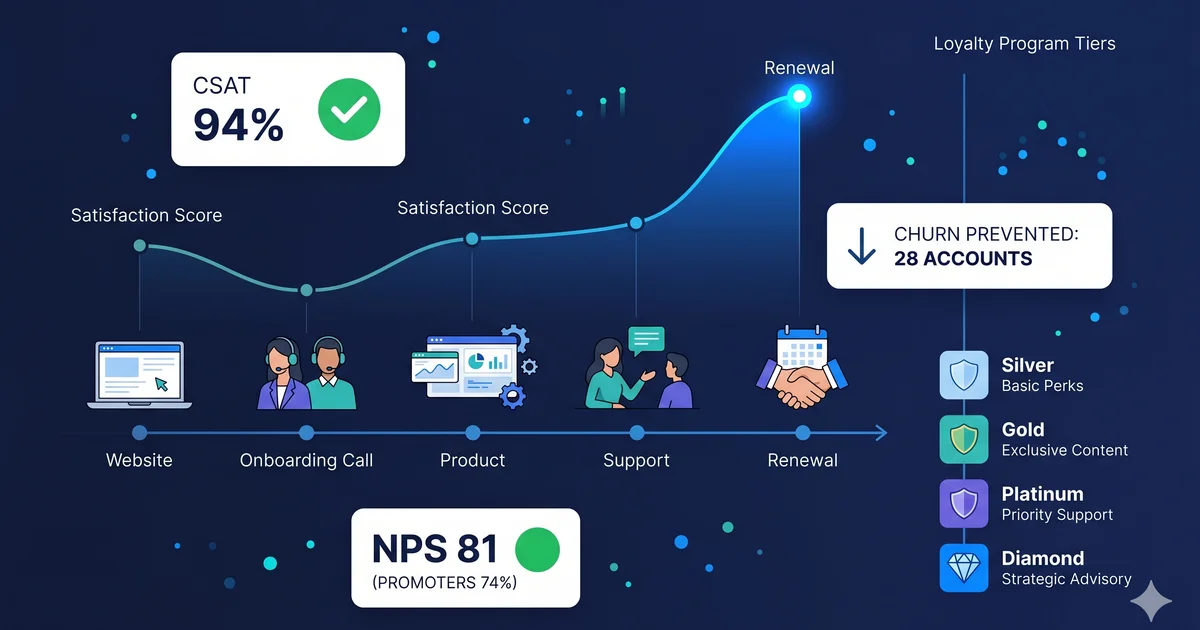
The implementation of a loyalty programme demonstrates the company's commitment to recognising and rewarding its most loyal customers.
Therefore, the company values customers' choice and preference for continuing to shop with it, by offering exclusive benefits such as:
- Early access to product launches;
- Gifts;
- Discounts;
- Points programmes.
This recognition creates an emotional bond between the customer and the brand, strengthening the relationship and encouraging loyalty.
The offering of exclusive rewards after a purchase or service is another key aspect of an efficient loyalty programme.
By receiving additional benefits, customers feel motivated to continue purchasing and remain engaged with the brand.
These rewards can be personalised according to the customer's profile and preferences, making them even more appealing and relevant.
In this way, the loyalty programme becomes a two-way relationship in which the company reciprocates the customer's loyalty with exclusive benefits, keeping them involved and satisfied.
Results
Loyalty is one of the main outcomes of a well-structured programme. By encouraging customers to continue interacting with the brand, whether through repeat purchases or other types of engagement, the company creates a lasting relationship cycle.
This cycle highlights loyal customers, those who are more likely to make repeat purchases, as well as recommend the brand to family and friends, positively becoming advocates of the brand.
This positive word of mouth, based on satisfying experiences, expands the company's visibility and reputation, attracting new customers and contributing to business growth.
Collecting customer feedback
Sending satisfaction surveys after a purchase is an effective strategy for collecting customer feedback and demonstrating a commitment to continuous improvement.
This approach not only provides an opportunity to correct any issues, but also strengthens the relationship and loyalty by showing that the customer's opinion is valued.
Collecting feedback through post-purchase satisfaction surveys is a direct way of understanding the customer experience.
By requesting customers' opinions about their purchase, the company demonstrates a commitment to offering a quality service and actively seeks to improve its products and processes.
By identifying any issues or areas for improvement through satisfaction surveys, the company has the opportunity to proactively address these matters.
This allows the company to resolve specific problems reported by customers and make necessary adjustments to its products, services or processes.
Therefore, a proactive approach to feedback demonstrates a commitment to learning from customer experiences and continuously improving the offer, resulting in better service to buyers' needs and expectations.
In addition to providing a channel for expressing opinions and concerns, the sending of satisfaction surveys strengthens the relationship between the company and the customer.
By demonstrating genuine interest in the customer experience, the company shows that it values consumer opinions and is willing to listen to them. This creates a sense of mutual trust and respect, establishing a solid foundation for a lasting relationship.
Monitoring the user experience
It is essential to monitor the user experience at every stage of the journey, identifying areas for improvement and adapting based on the feedback received.
Furthermore, investing in the training of the customer service team is crucial for delivering exceptional and attentive service, contributing to a positive customer experience and the success of the e-commerce operation.
Monitoring the user experience after a purchase is a continuous and necessary process for understanding and improving the customer journey in e-commerce.
Carefully observing each stage, from browsing the website to completing the purchase, makes it possible to identify potential barriers, technical problems or friction points that may negatively affect the customer experience.
Adapting based on suggestions and feedback received is an important aspect for the growth and success of e-commerce.
By listening to customers and implementing improvements based on their suggestions, the company demonstrates its willingness to adapt and evolve to meet the constantly changing needs of buyers.
This proactive approach creates a more personalised experience aligned with customer expectations, resulting in greater satisfaction and loyalty.
Team training is essential
Investing in the training of the customer service team is a determining factor for delivering exceptional and attentive service to customers.
The service team is directly involved in direct interaction with customers, whether through online chat, email or telephone.
By providing adequate training, the company equips its staff to deal with customers in a professional, courteous and efficient manner.
Training also allows the team to develop problem-solving skills and empathy, which contributes to a positive and satisfying customer experience.
Conclusion
Customer satisfaction is the pillar that underpins the loyalty and growth of any business. By providing customers with a positive and satisfying experience, companies build lasting relationships and strengthen their position in the market.
By understanding customer needs and expectations, it is possible to offer personalised solutions and create a competitive advantage.
In this regard, investing in the customer experience is essential to ensure loyalty and long-term success.
Therefore, it is up to companies to adopt a consumer-centric approach, constantly seeking to improve the quality of their products and services in order to ensure the full satisfaction of customers and the building of a solid base of loyal buyers.

Technology that shows up in your P&L
Code that generates revenue, not slides. Fixed-scope projects with defined scope, price and timeline before we start.
Request a quote