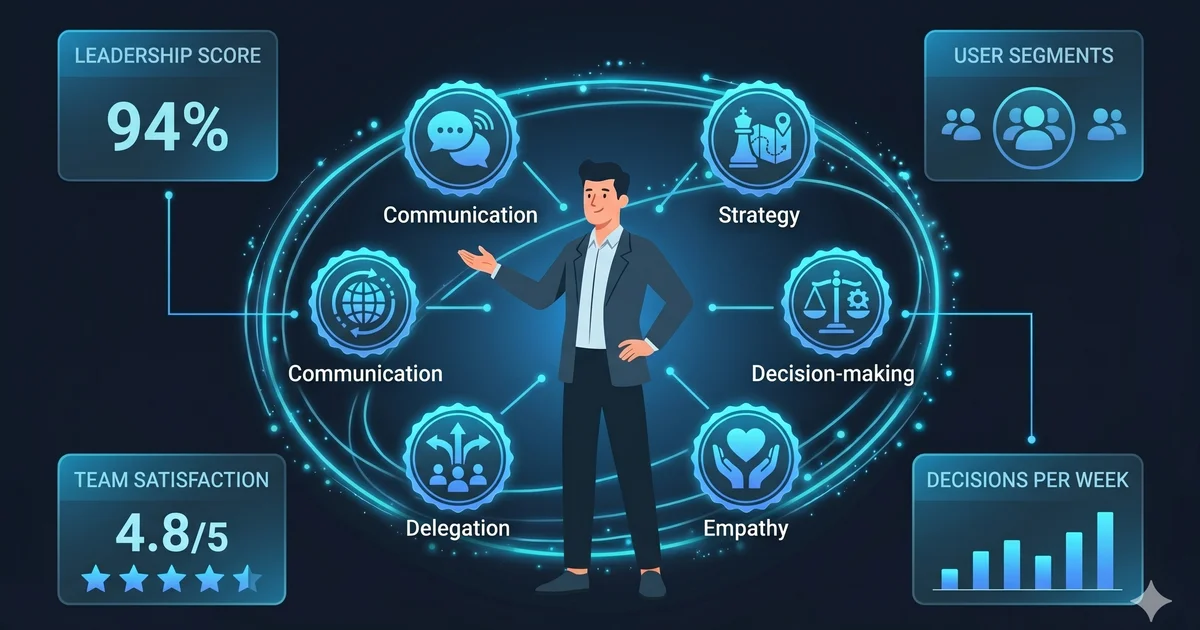

5 Essential Skills Every Leader Must Have
I have observed that it is not uncommon for people in supervisory roles to struggle to identify the differences between a manager and a leader. It is clear that these two professional profiles share a number of everyday skills, but one must not lose sight of the fact that exercising leadership is something very different from simply occupying a management position in an organisation.
Working relationships have undergone many changes in recent years, and it has become increasingly necessary to have more than just authority to motivate a team and ensure good results. It takes inspiring collaborators through actions and positive examples, being respected by those you lead not only for the position you hold, but above all for the professional you are.
In this article, I will list five skills that every leader must have. So, if you want to know more about this subject, read the post to the end.
What Does It Actually Mean to Be a Leader?
A leader is someone who can make collaborators want to do what is necessary for the good of the organisation of their own accord, without needing to be given orders. This happens primarily through leading by example.
Leadership is not founded on authority or fear, but on trust and respect that are earned through a good relationship with the whole team. Once a leader engages people through the influence they have over them, there is no need to impose oneself through power.
Those who exercise leadership must have the ability to reconcile different points of view, even those contrary to their own, seeking consensus with the aim of achieving the company's objectives.
A leader is also able to identify failures in work processes and difficulties faced by the team, pointing towards effective solutions. From there, they provide feedback, stimulating people's development and preventing errors from recurring.
Furthermore, leadership is not exercised to demonstrate superiority. On the contrary, a good leader does not place themselves above those they lead, but walks alongside them, sharing with the whole team the recognition for the good results achieved.
The 5 Skills Required of a Good Leader
Reflecting on what I said above, we can conclude that today's companies do not need managers who are seen as powerful bosses who merely issue orders, blame people for mistakes and take credit for good results.
What organisations actually need is the figure of a leader who uses their skills to engage their team with the purpose of achieving a specific goal and reaching where they want to be.
Here is the list of the key skills necessary for exercising good leadership:
1. Communicate effectively
Communication is the way a leader conveys what they think, what they feel and what they want done to the other members of the team. It therefore needs to be impeccable, so as to avoid any misunderstandings or future headaches.
Effective communication ensures that the message transmitted reaches everyone clearly, enabling the productive exchange of opinions and perspectives.
In this way, knowing how to express yourself is an essential skill for a good leader, meaning they must be capable of conveying information clearly and precisely, leaving no room for misinterpretation.
It is also important to note that communication is a two-way street: it is not enough to speak well. Listening attentively to the people you work with in order to better understand what needs to improve is equally part of it.
2. Be human and motivate through example
For successful leadership, it is important that people see you as an example to follow, as someone who conveys respect and trust, whilst also demonstrating solid knowledge in your area of expertise.
For this reason, even if you work with a team made up of professionals from various fields, study enough to understand something about each of their areas. This makes conversations with these specialists more productive whilst giving you a broad overview of the entire process.
Arrive on time, meet deadlines and respect the company's policies. No collaborator will respect you when you raise an issue about their lateness if you yourself arrive late every day. They may not say this to your face, after all, you are in a position of authority, but respect is quite another matter.
Despite all of this, be human. Try to understand that people have problems. It is worth evaluating an employee not by a single moment or phase, but by their track record since they joined you. Everyone has highs and lows, and if you can draw the best out of someone who is going through a difficult period, that person will be eternally grateful.
3. Maintain strategic planning
To coordinate work processes and people, organisation is essential. Without it, even with the best of intentions and willingness, things can go wrong. Planning is what provides the necessary foundation for achieving results.
Strategic planning should encompass the objectives to be reached, the work schedule, costs, risks, how to mobilise the team and the monitoring of activity execution.
All of this ensures you do not waste time on unnecessary actions, squandering resources and energy. And if something does not go as planned, you have room to intervene without it compromising the final result.
4. Know how to manage conflict
When it comes to human beings living and working together, conflict is almost inevitable, and this can be considered normal, since we view facts from different angles and naturally diverge in our perspectives.
However, in these situations, the leader must act to resolve the disagreement, presenting the best solution for the company in such a way that both parties feel motivated to strive for the common good.
There are a number of strategies you can use to manage conflict, including taking a pause to allow the parties to calm down, treating those involved with fairness, and identifying the root of the problem. I will dedicate a separate post to this subject in the future, where we can explore it further.
5. Be proactive
Those who hold a leadership position must always anticipate situations that arise, ensuring there are no bottlenecks that slow down or delay the progress of work. This is not about being paranoid or worrying unnecessarily, it is about having a broader view of the landscape, which allows you to foresee certain scenarios and prepare for them, for example by defining priorities.
A proactive person shows the team that the same task should not always be performed in exactly the same way, which will inevitably lead to different results. A professional like this is always finding ways to guide the team towards delivering their best, making them increasingly effective.
This behaviour is important not only because it helps manage resources more mindfully, but also because it allows you to draw the finest qualities out of each employee, helping them become a more complete professional who is confident in their skills.
I have years of experience and still learn a great deal every day, not only from the market, since technology is in constant evolution, but also from the professionals around me. So if I can give you one piece of advice, it would undoubtedly be this: in addition to developing the 5 skills I have listed, remain humble, because that is the only way you will keep learning more and more.
Until next time!

Strategic CTO as a Service
Weekly technical decisions, roadmap protection and senior team from €3,000/month. No scope creep surprises.
Talk to Carlos Brandão