
5 Tips to Increase Your App's Engagement
App usage has grown enormously in recent years. In fact, if you take a look at your smartphone, you will notice there is a large number of apps from different companies covering the most varied needs.
They make our days easier in many ways. For example, a bank's application allows users to access their account and carry out various banking operations, such as payments, transfers, and instant transactions, among others.
Not having to visit the bank in person is a great advantage, as it saves time and simplifies everyday tasks. Moreover, achieving user engagement with such apps is straightforward.
However, this is not the reality for many companies, which need to work on promoting their apps and improving public engagement with them.
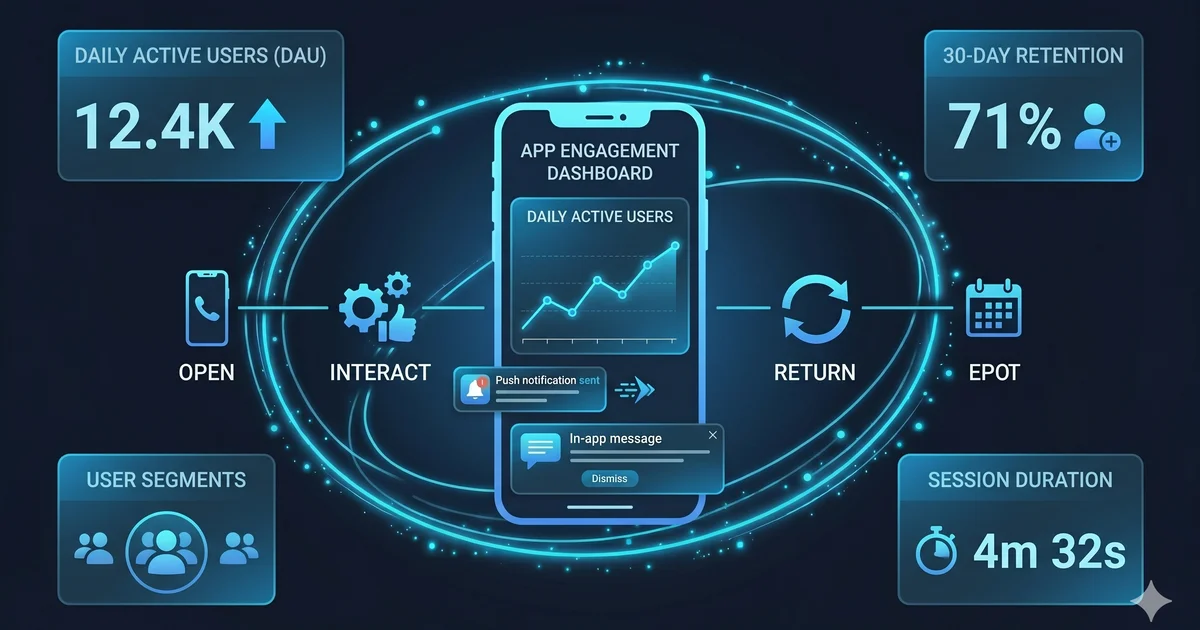
It is essential to show people that your application, just like others, can help them in many ways. App engagement matters because the more people download it, the greater your company's reach.
With that in mind, this article will explain the importance of applications, offer tips to improve engagement, and outline the benefits of these strategies. Read on!
Understanding the Importance of Applications
Applications are part of people's daily routines and are becoming increasingly important for all of us. Any company can develop an application, and it can be used for a wide range of purposes, such as:
- Shopping;
- Payments;
- Requests;
- Content distribution;
- Entertainment.
This is a technology that makes everyday life easier, which has made its use even more widespread. The smartphone itself is a device that facilitates various personal and professional activities, such as expense tracking.
We can organise tasks, monitor and schedule meetings, track projects and fulfil all our commitments. It is a true facilitator in a society with an ever-busier daily pace.
Furthermore, people can note their tasks or add them by voice, enter data on their activities to track performance, and much more.
Companies can also rely on applications that help organise tasks and allow all team members involved in a project to access them. It is a way of enabling remote work without compromising performance and productivity.
Many applications are used to manage finances; users can register payment dates for each bill, which reduces the risk of forgetting.
Expenses can be categorised, such as internet, rent, education, gas, among others, regardless of the device's operating system.
Additionally, companies provide apps so that their customers can control automated home features. One example is the ability to switch the lights in your home on or off even when you are on the other side of the world.
GPS applications prevent users from getting stuck in traffic by offering alternative routes. Some versions also report sections with accidents, roadworks, police checks and other situations.
The public sector also invests in application use. Various government bodies provide apps where users can check fines, bus timetables, official government publications and many other features.
Through applications, it is possible to perform many useful everyday tasks, which means companies that offer this technology to their customers earn their trust and preference.
But, much like a corporate website, this tool requires certain adjustments and strategies to increase user engagement.
The more engaged users are, the more they will use the app and recommend it to others. But how do you improve engagement? That is what we will discuss in the next section. Keep reading.
How to Improve the Engagement of Your Business App
The relevance of applications is so great that there were 29.6 billion downloads in the third quarter of 2019 alone.
Naturally, some stand out more than others. However, that does not prevent a company from investing in strategies to increase its app's engagement. Among the available strategies, we have:
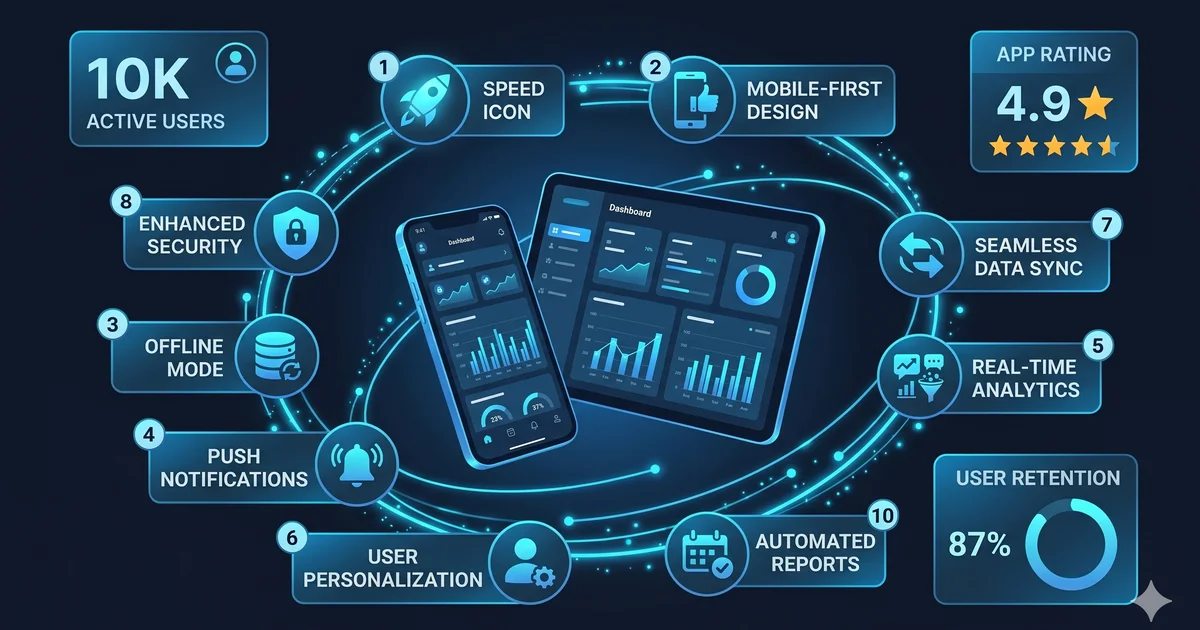
1. Use an authentication API
It is common for apps to require registration for their various features, but if the process is too lengthy, it becomes tedious for the user. To solve this problem, you can invest in an authentication API.
This way, registration can be completed using the user's Google or Facebook account information, speeding up the entire process. Users decide within seconds, and the chances of them abandoning the process are far lower.
2. Use push notifications
This tool brings users back to the application through notifications, increasing engagement.
These are small call-to-action prompts that appear to the user and are practically irresistible. To achieve this, they use mental triggers that spark people's curiosity and the urge to click.
3. Improve the app's appearance
Any savvy business knows that the appearance of the application is very important and influences the user's decision to download it or not. It is a decision people make in just a few seconds.
If they are attracted by the icon, the chances of achieving good engagement are even greater.
So, ensure the app looks presentable in the app store with an attractive icon that conveys value, security and credibility. If it lacks these characteristics, it is important to rethink the visual identity.
4. Maintain a strong digital presence
The application should have a good digital presence to avoid inactive profiles. Through social media, it is possible to understand the public's behaviour and maintain direct contact with them.
These two advantages allow a company to improve its app's engagement. Get to know your audience's preferences, what they consume and how they communicate, and adapt your application's features accordingly.
It is a way of creating identification and building positive relationships that sustain the business. In other words, ensure your application's digital presence is personalised for users, keeping them engaged for longer.
5. Improve the user experience
The easier and more intuitive the application is, the more satisfied the user will feel. Think about the design in a way that optimises how it is used, and also consider the phone models in use, since the experience on larger screens is different.
For example, if the smartphone is very large, it is difficult to operate the app with just one hand, and one way to address this is to consider the heat maps of those devices.
A company's app, for example, should allow a personalised interface based on the tastes and preferences of users. This personalisation helps increase engagement and conversion rates.
The Benefits of These Strategies
All the strategies we have outlined here are aimed at increasing the engagement of your business's application. But beyond achieving that, they also improve the tool itself, which is very important for the company's image.
Building a positive image is the best way to earn consumers' trust in your brand. Given the vast number of options available to purchase the same product or service, the modern consumer wants to trust the company they choose.
As such, a company's application should already demonstrate its professionalism, and can be a genuine ally in building the brand's reputation.
Improvements also benefit the business itself, as some features serve its own interests. For example, if your app allows users to access invoices for payment, it is essential that it works properly.
This way, the organisation ensures that the customer always stays on top of their commitments. So, every time you invest in improvements to your tool, think about ways to meet the needs of your audience as well as your own.
Finally, through optimisation actions on your application, a company is able to get progressively closer to its target audience. Being close to them is important for generating opportunities, expanding reach and many other advantages.
Conclusion
Applications make users' lives easier and improve the relationship between them and companies. Most businesses invest in them because it is a way of being present in people's lives and becoming more accessible to them.

Fixed-scope project from €5k to €50k
Defined scope, fixed price, delivered in 90 days. Real product with a senior Brazilian team supervised by a strategic CTO.
Request diagnosis