
Technical Due Diligence: How to Evaluate a Startup's Technology Before Investing
Technical due diligence is the assessment of a company's technology before you invest, acquire or partner. It examines the code, the architecture, the security, the technical debt and the team, and answers one question: can this technology handle the growth the business is promising? Without that answer, the investor is betting blind.
What technical due diligence is
When a fund invests in a startup or a company buys another, it audits the finances and the contracts. The technology, often the main asset, goes unchecked. Technical due diligence closes that gap: an independent expert evaluates the software and the team behind it before the money changes hands.
It is not an afternoon of reading code. It is a structured diagnosis that measures real risk: what breaks when the product scales, what it costs to fix what is already wrong, and what happens if the key developer leaves tomorrow.
Who needs it
- Investors (VC and PE): before a round or an acquisition, to know what they are really buying and price the technical risk into the valuation.
- Acquirers: in a merger or purchase, to avoid inheriting a system that cannot be maintained.
- Founders: before raising, to reach the table with no surprises and negotiate from strength.
What it evaluates
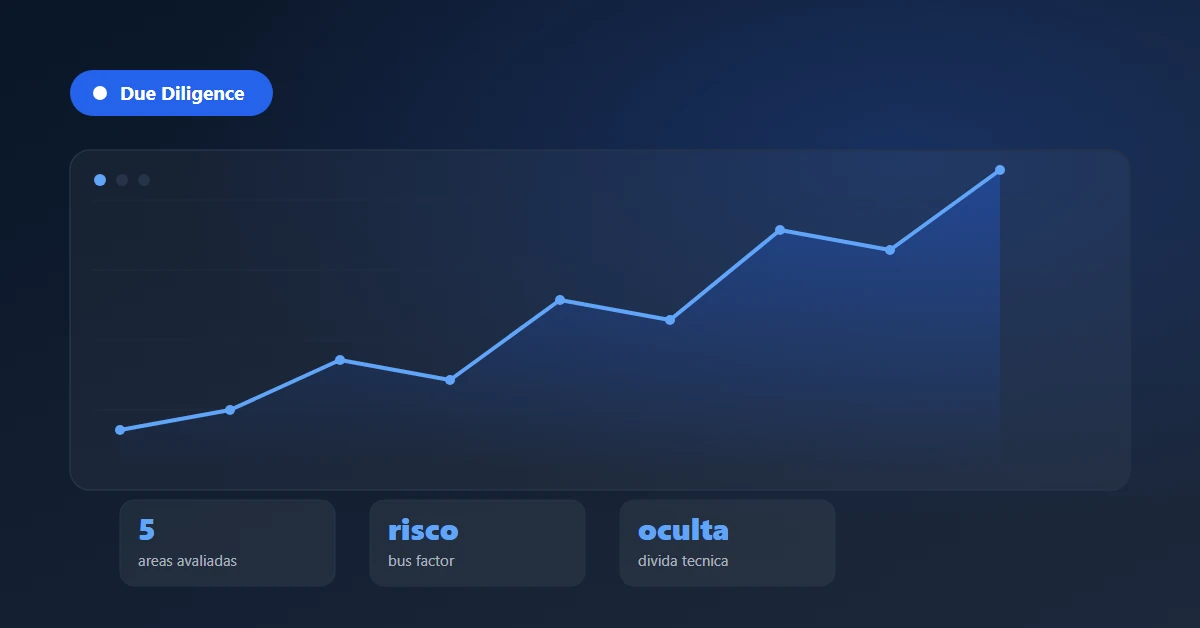
Serious technical due diligence covers seven fronts, each with a direct impact on the value of the business:
- Code quality: readability, automated tests, standards. Code without tests is debt waiting to blow up.
- Architecture and scalability: does the structure support 10 times more users without a full rewrite?
- Security: data handling, authentication, known vulnerabilities and compliance.
- Technical debt: how much pending work the system hides and how much it slows every new feature.
- Team and bus factor: how much the operation depends on one person. If a developer carries the knowledge in their head, that is the biggest risk.
- Infrastructure and cost: what it costs to run today and how that bill grows with the business.
- Intellectual property and licenses: who owns the code and which third-party dependencies could become a legal problem.
The red flags it uncovers
A good audit does not hand over a pretty score, it hands over the risks nobody wanted to see:
- Zero automated tests: every deploy is a gamble.
- Dependence on a single person: the knowledge lives in one head, not in documentation.
- Architecture that does not scale: it works with 100 customers and collapses at 1,000.
- Hidden technical debt: the roadmap promises speed the code cannot deliver.
- Improvised security: sensitive data with no real protection.
Technology is usually a startup's biggest asset and the one almost no one audits before signing. Technical due diligence does not look for perfect code, it looks for how much the risk you are buying will cost.
How to do it well
Useful technical due diligence is fast, independent and actionable. It combines code review, team interviews and analysis of architecture and infrastructure, and ends in a clear report: what is solid, what is risk and what it costs to fix. Not a list of complaints, a decision guide.
That is why many funds and buyers bring in an external CTO to run it. Someone who has built and scaled systems sees in days what a non-technical reviewer never would, and translates technical risk into business language: impact on timeline, on cost and on valuation.
Final thoughts
Investing or acquiring without technical due diligence is signing without reading the most expensive part of the contract. The audit does not remove the risk, it makes it visible and negotiable. And in technology, the risk you catch in time is almost always cheaper than the surprise that arrives later.

Strategic CTO as a Service
Weekly technical decisions, roadmap protection and senior team from €3,000/month. No scope creep surprises.
Talk to Carlos Brandão