
How to Turn Uncertainties into Results in Business Planning
Business planning is essential for every company, as it is through this process that the next steps can be anticipated. However, some uncertainties may arise during execution, which are not necessarily problems.
These uncertainties can be used wisely to turn the situation around when analysed and addressed with caution. To do this, it is important to understand some concepts such as business planning and uncertainties in order to be able to act accordingly.
With that in mind, today's article will help you understand what business planning is, how it can be carried out, what uncertainties are, and how you can use them to your advantage, as well as some benefits of this practice.
What is business planning?
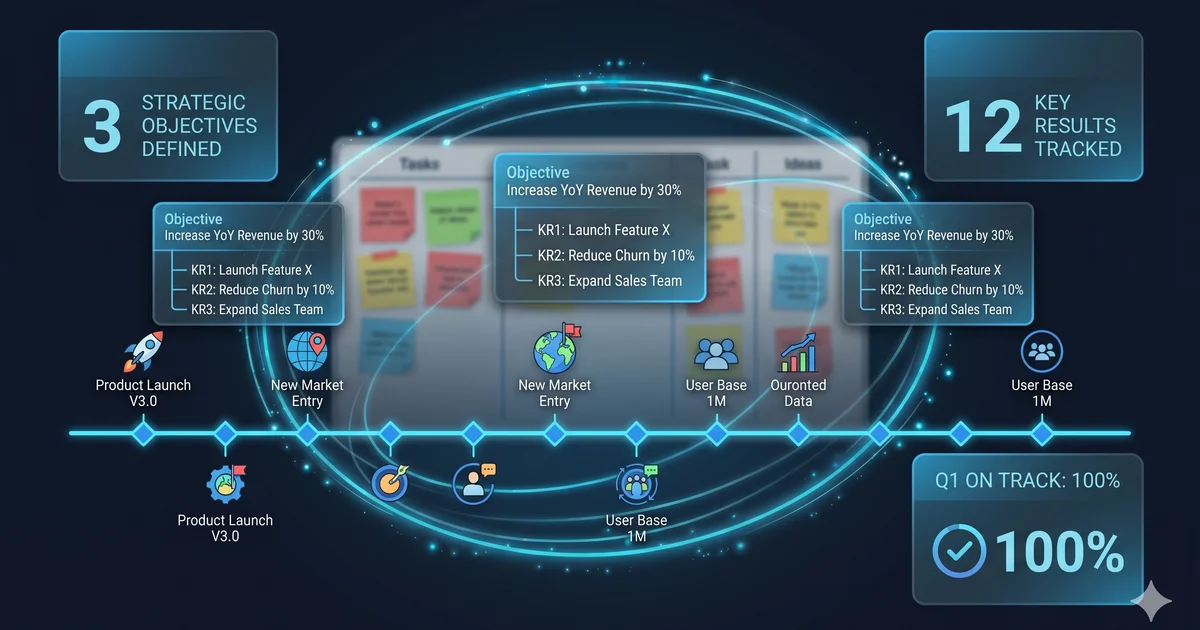
A business plan is a documented strategy for a company that highlights its objectives and its plans for achieving them.
It describes a company's market entry plan, financial projections, market research, commercial objective and mission statement.
Key employees responsible for achieving the goals can also be included in the company plan along with a timeline.
The purpose of a business plan is threefold: it summarises the organisation's strategy for executing it in the long term, secures funding from investors, and helps to anticipate future business demands.
In other words, planning is responsible for:
- Anticipating scenarios;
- Defining organisational goals and objectives;
- Mapping out strategies;
- Thinking of methods to achieve the goals;
- Determining how the company's growth journey will unfold.
In detail, all these steps should be included in your company's plan to guide the next steps and the direction of the business.
Types of business planning
Within business planning there are 4 types: strategic, financial, tactical and operational, in order to describe operations in more detail.
Strategic planning
The first type of planning concerns the objectives and goals that will guide a company, which should be updated regularly to keep the business on the right track.
In this regard, strategies are also drawn up to seek to achieve these aspirations, and the main opportunities within the context are established.
For example, your company will only stand out if it has a well-defined plan to outperform regional competitors.
As your company becomes larger and more complex, strategy formulation will need to become more sophisticated, both to sustain growth and to help you bring together the leadership and resources needed to maintain the development of your company.
To do this, you will also need to start collecting and analysing a wider range of information about your company, both about how it operates internally and how conditions are developing in your current and potential markets.
Financial planning
All of the company's resources are organised through financial planning. Not just the current budget, but the future one as well, which makes it possible to maintain long-term financial health.
In this way, the other plans are made possible through information on the balance sheet, cash flow, and revenue projections. You can also bring in external companies to help with this task.
Tactical planning
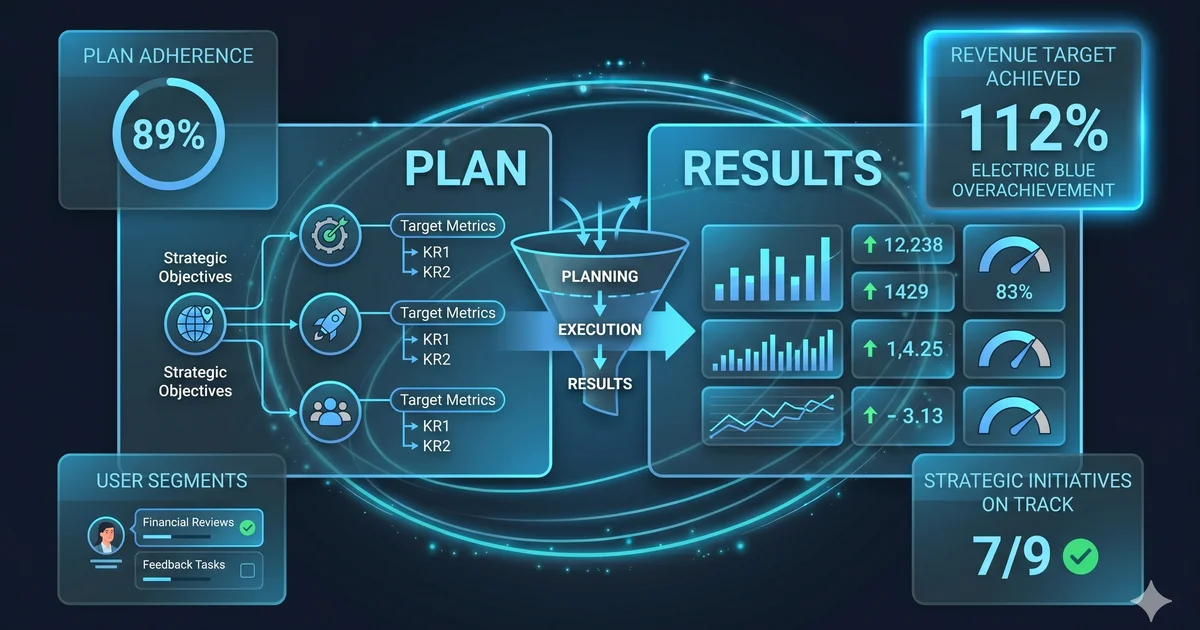
Tactical planning is the step carried out after a company or team creates a strategic plan, in order to break that plan down into smaller objectives and goals.
A tactical plan is used to set objectives and determine how they will be achieved through actions and steps. Most tactical plans outline specific steps or actions that will be taken to meet the goals of the broader strategic plan.
These actions or steps are often delegated to the appropriate team members or employees to ensure they are met in a timely manner.
In this way, your company is able to have greater control over the steps it is taking.
In most cases, tactical planning is implemented when a company or team needs to respond to an immediate problem or situation.
Operational planning
An operational plan is an extremely detailed plan that clearly defines how a team or department contributes to achieving the company's objectives. It describes the daily tasks required for a company to function.
When properly drawn up, an operational plan ensures that every manager and every employee knows their specific obligations, as well as how they should carry them out within a defined schedule.
Mapping out the day-to-day tasks that ensure a clear path towards your business and operational objectives is essential for success.
What are uncertainties, risks and threats?
Risks, uncertainties and threats are not synonymous and have very distinct meanings from one another. Take a look!
Uncertainties
Uncertainty can be directly related to a lack of knowledge or foresight about a parameter or factor, making the results of a given action unpredictable or uncertain in your company, for example.
In this way, uncertainty makes it difficult to propose the next steps within a plan, but it can be incorporated, as we shall see below.
Risks
Risks are known parameters that can be anticipated, as they are aspects about which there is already knowledge from previous experience or even from market data. Risk can be negative or positive, and is fully accounted for in the initial plan.
Threats
Threats, in turn, are factors that can influence risks, either positively or negatively. That is, they are conditions capable of interfering with the consolidation of a certain type of risk.
For example, your company has the risk of growing or reducing its revenue by 30% in the next quarter.
However, if a competitor emerges in the region during this period, it becomes a threat that will tend to reduce revenue if it offers a better service than yours, or increase it if the service is worse.
How can I incorporate uncertainties into planning?
This is a question many business owners ask, because how do you know what to do with something uncertain, about which you have little knowledge? Do not worry, here we explain how to do it.
The first tip for dealing with uncertainties is through risk management by the project team or management. Risk management is the process of identifying, assessing, and controlling threats to an organisation's capital and profits.
These risks come from a variety of sources, including financial uncertainties, legal liabilities, technology issues, strategic management errors, accidents, and natural disasters.
A successful risk management programme helps an organisation to consider the full range of risks it faces. If there is insecurity within the team, you can seek external help to overcome that challenge.
Risk management also examines the relationship between risks and the cascading impact they can have on an organisation's strategic objectives.
In this way, your team should analyse concrete information about the company and propose possible outcomes, incorporating some uncertain aspects into the plan.
Benefits of risk management and incorporating uncertainties into planning
Finally, you should be aware of the benefits that uncertainties and risk management can bring to your company. We can list the following points as the main ones:
Forecasting probable problems
One of the benefits of risk management is that it changes the culture of a business organisation. Companies that tend to focus more on risk management tend to be more proactive than other companies that may be reactive.
Risk management forces companies to carefully examine each of their business processes and decide what could go wrong. This detailed hypothetical analysis helps companies to become more proactive and to anticipate probable problems.
Enables growth
Risk management sounds like a defensive business activity. It has negative connotations, and it is assumed that the activity is carried out in order to avoid losses.
However, during risk management, companies are required to study their processes and risk factors in detail. Management is aware of all the possible things that can go wrong.
Helps to remain competitive
This incorporation of uncertainties into planning helps companies to minimise their losses at critical times. These are the times when poorly managed companies struggle to stay afloat.
On the other hand, companies that have risk management processes in place tend to minimise their losses. Thus, the competitiveness of these companies remains constant. In fact, it can also improve.
Improvement of business processes
Daily risk management processes force companies to collect more and more information about their processes and operations. In this way, your company can have greater confidence when dealing with uncertainties, for example.
As a result, companies are able to identify the parts of the process that are inefficient or where there is room for improvement. The end result is that during the process, many opportunities are identified and processes are enhanced.
Enables better budgeting
Companies that have risk management processes in place have better control of their finances compared to other companies. This is because they often look closely at their financial figures and try to cut any waste.
The end result is that these companies have a better knowledge of their processes. In turn, these companies also know their budgets better and can request them without fear.

Strategic CTO as a Service
Weekly technical decisions, roadmap protection and senior team from €3,000/month. No scope creep surprises.
Talk to Carlos Brandão