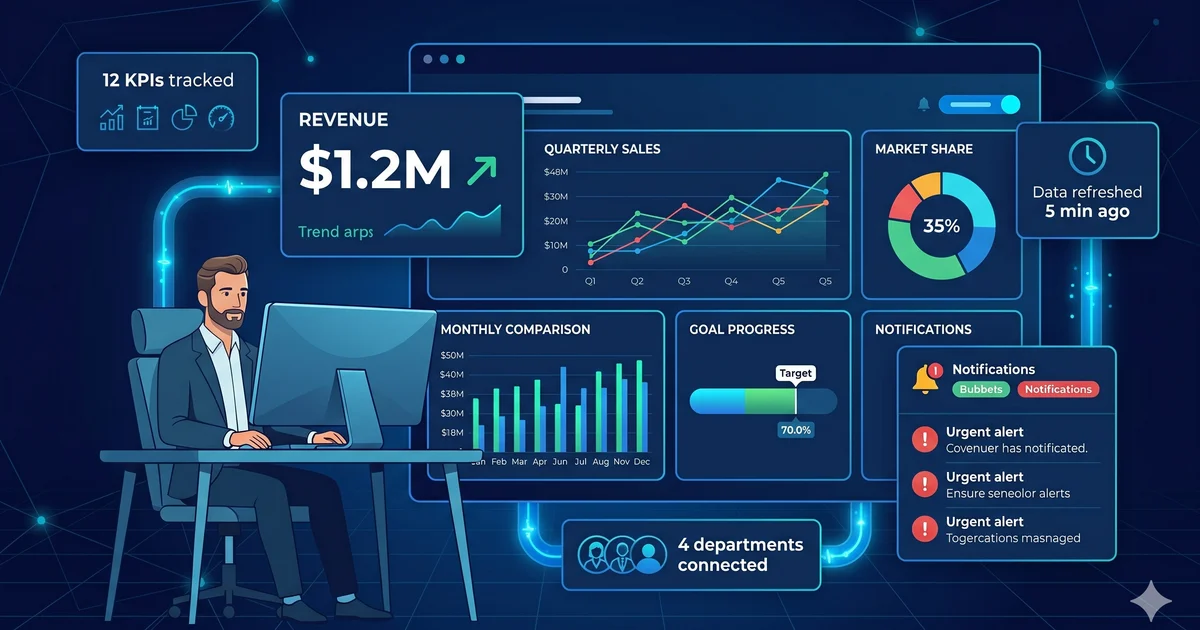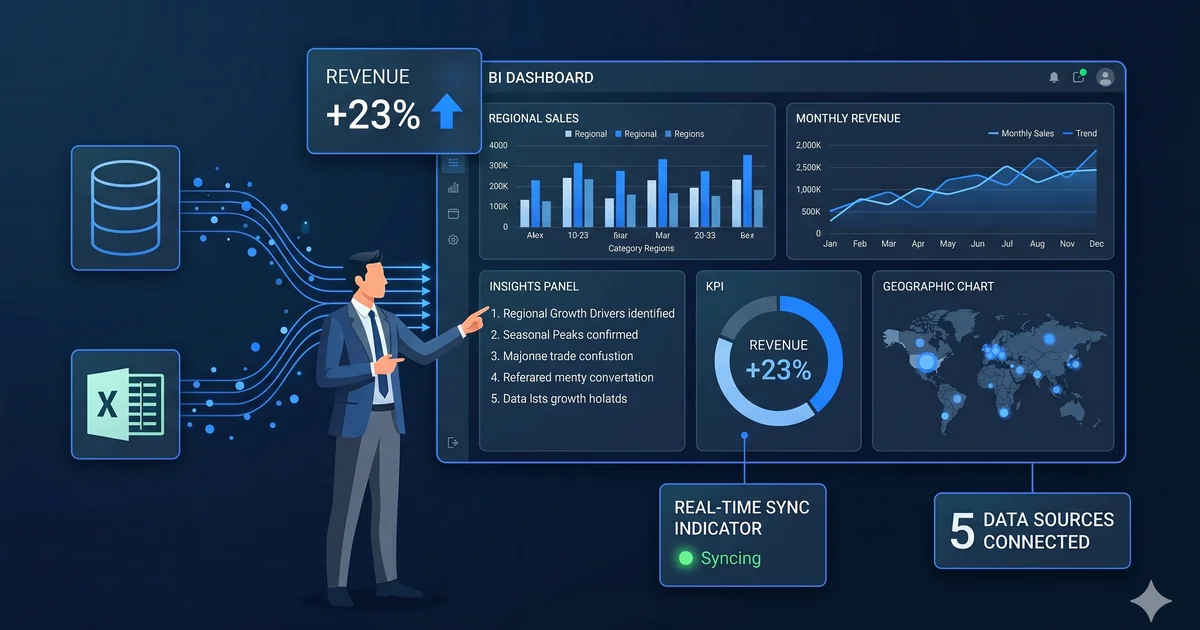

5 Benefits of Data Integration for Managers
With the arrival of the internet, numerous productive and administrative processes have become far easier thanks to a significant capacity for data integration, being extremely useful and storing a great deal of information in a single place.
But not only that, they have made life easier for many companies that, by knowing how to use them appropriately, have optimised a range of demands and helped mainly those managers who have greater autonomy to manage such data.
With that in mind, today's text will bring together 5 benefits that data integration can provide for managers, showing how it can have an impact on the business and how the entire process works, as well as providing ideas on how your company can put it to use.
From large corporations to the everyday individual, the internet and technology have changed the way everyone sees the world. Their inventions, conveniences, and possibilities make the eyes of many people around the world light up with enthusiasm.
The simple fact of being able to pay a bill in a matter of seconds through an application, rather than going to a payment centre or cash machine, already significantly changes a person's routine.
However, in the digital world, various pieces of information are shared at every moment, whether through a school presentation or when making an online purchase. The internet is full of information and this is reflected in practically everything.
Imagine the volume of data that a company, particularly a multinational, uses every day. Managing that enormous amount of data can be a great challenge, and using it in a way that helps management and the company can be a real headache.
Of course, to do so it is necessary to understand that technology will be used to automate the process, and even if that is the aim, the more integrated information that can be used quickly, the better.
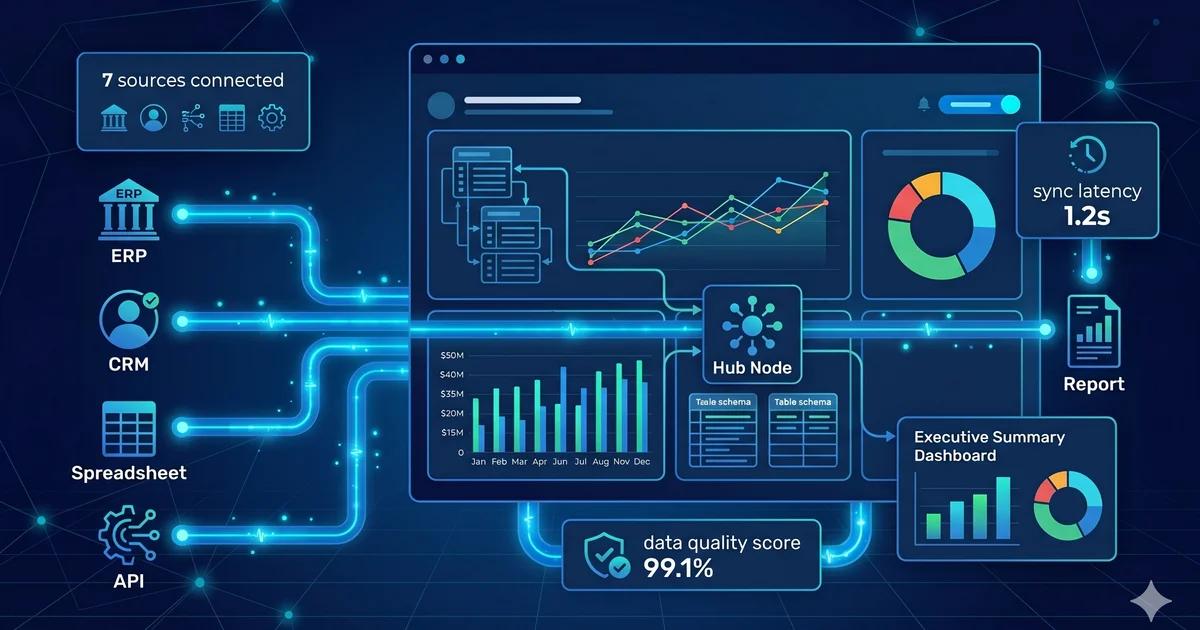
It is therefore important to bear in mind that data integration in the business context is nothing more than storing data in a way that keeps it in a single place and allows it to be used across all company systems, optimising time and effort.
With this in mind, the following sections will address how managers can make the most of this integration and how your business can benefit greatly from it, whether it is a clothing shop or any other type of company.
Concepts of Data Integration
It is understood that there is no single model for carrying out systems integration, which is why companies look for the approach that best fits their style of managing data, though all of them use technology at some level.
Some prefer to use cloud-based systems at all times, while others prefer to use their own systems. Regardless of the choice, daily use and the constant search for information are necessary, meaning a fluid and functional system is required.
A company needs agile information just like any other, and managers must always be attentive to how information is used to ensure that each department can be optimised and delivers on its targets.
As such, managers can use data integration to:
- Accelerate productive and administrative processes;
- Ensure a greater flow of information;
- Reduce the number of errors;
- Increase the company's competitiveness.
As for competitiveness, this is because the more managers use information appropriately, the greater the progress of their teams will be and, consequently, the more the company can stand out and continue with its strategies and methods.
It is therefore necessary to seek to make the most of this integration, enabling your company to stand out and remain attractive to the general public.
With this, we have brought together five benefits of data integration for managers, showing why it is worth investing in this type of approach.
01 - Fewer Errors
The simple fact of having information gathered in a single place and easily accessible already greatly reduces the number of errors, because even if the company is highly optimised, the time spent waiting for one department to send information to another and then comparing it to see if it is correct considerably delays demands.
One thing is waiting for approval for a purchase; another is waiting for information held within the company about how to proceed with materials or which maintenance method is best.
The rate of human error will always be far greater than that of a machine which, in theory, has a very low or no error rate, making this benefit very well exploited.
02 - Greater Departmental Productivity
Technology is remarkable and it enables processes to be carried out far more quickly. People often do not even notice that something is done simply by issuing commands, without all the manual work previously involved in the process.
Even when used to improve the productivity of services, data integration facilitates the collection of information and makes it available for use and improvement of the company's methods and processes.
Therefore, spending on data integration is not exactly a cost, but an investment.
03 - A More Competitive Organisation
We know that the digital environment in which we live today is quite competitive, and companies are constantly showing themselves to be attractive to their leads and customers, often even capturing the attention of competitors' clients.
And by being more agile and dynamic while delivering quality at a good speed, the business becomes not only appealing but extremely competitive, as everyone wants someone who offers quality quickly, even if it is not always cheap.
In other words, your company will greatly increase its reach and authority in the market segment it has chosen to operate in, allowing it to expand and, in an organic and natural way, begin to generate more profit and win ever more customers.
04 - Cost Reduction
This is something every company wants to hear and, when we think about today's world, costs are enormous and can come from a variety of sources. One such source is the sheer number of programmes and the maintenance and development of systems alongside technology.
When data is integrated, costs are reduced considerably, which helps the company in various ways, as the money that would have been spent on this area can either bring improvements to it or be used elsewhere.
In other words, this directly impacts the company's profit, and we know that in the corporate world, time, money, and losses are all costs to be avoided. If the company wants to save money and do well, data integration is a viable path.
05 - Highly Optimised Processes
When we think about optimisation, technology always becomes an inevitable resource. We can say that when a process is optimised, it uses the minimum possible amount of resources in less time and delivers excellent quality.
Data managers must always be attentive to the best ways of using technology and, though we have touched on this several times throughout the text, such as the speed of processes, it is necessary to understand that this is directly linked to the customer.
Not least because the quality and speed with which the customer obtains what they want is directly reflected in their satisfaction, and this metric is essential for the company to remain competitive and to be able to retain its leads and customers, generating greater profit over the years of the organisation's life.
Final Remarks
Today's text covered five benefits of data integration for managers, presenting its concepts and ideas, as well as pointing out some advantages and disadvantages, in addition to the impact it can have on the job market and on the brand itself.
When we think of a company, it should be synonymous with organisation, that is, the more things are working as they need to work, the faster it will be in making decisions and the more dynamic it will become, paying much closer attention to the market.
In other words, the benefits mentioned throughout the text are very significant advantages and, when the company knows how to use them in a way that combines with what it already does very well, it creates a powerful force capable of making its mark in the market.
As such, use this text as guidance and research as much as possible how to implement this idea in your company in a way that keeps its essence intact, attracting an audience and gaining strength in the chosen market segment.

Product with proven ROI in real data
Sthealth reduced billing errors from 15% to 4% in 60 days. See how strategic data transforms operations.
View case studies