
Business Intelligence in Logistics: How BI Improves Supply Chain Processes
Business intelligence in the logistics industry turns scattered operational data into decisions. It consolidates fleet, inventory, delivery and cost data into a single view, so managers cut waste, spot bottlenecks early and act on what the numbers show instead of on intuition. This guide covers what BI is, how it applies to logistics, and the gains it delivers.
Although not everyone is familiar with the term, Business Intelligence is a practice that has grown significantly with the rise of the internet and advances in technology, supporting many companies that invest in this type of strategy.
Today's article will cover the concept of Business Intelligence: what it is, how to apply it in your business, the advantages of using it in your company, and the impact it can have on your day-to-day operations.
Many technologies and working methods are implemented across the most diverse companies every month. In many cases, adaptations are made so that the same work can be carried out in each organisation with equal efficiency.
Even cosmetics companies need something very specific: organised processes that, directly or indirectly, largely dictate how the business operates.
Organising tasks and demands is part of a lengthy process that needs to be optimised in any company. In other words, it is a process that involves significant logistics and investment from various areas of an organisation.
Consider, for example, a company that sells services. Depending on the number of clients and the activities involved in the process, Business Intelligence becomes very necessary, almost a priority.
But what exactly is Business Intelligence? How does it work and how can it be applied to your company? The answer to this and many other questions will be provided in the sections below.
The Concept of Business Intelligence
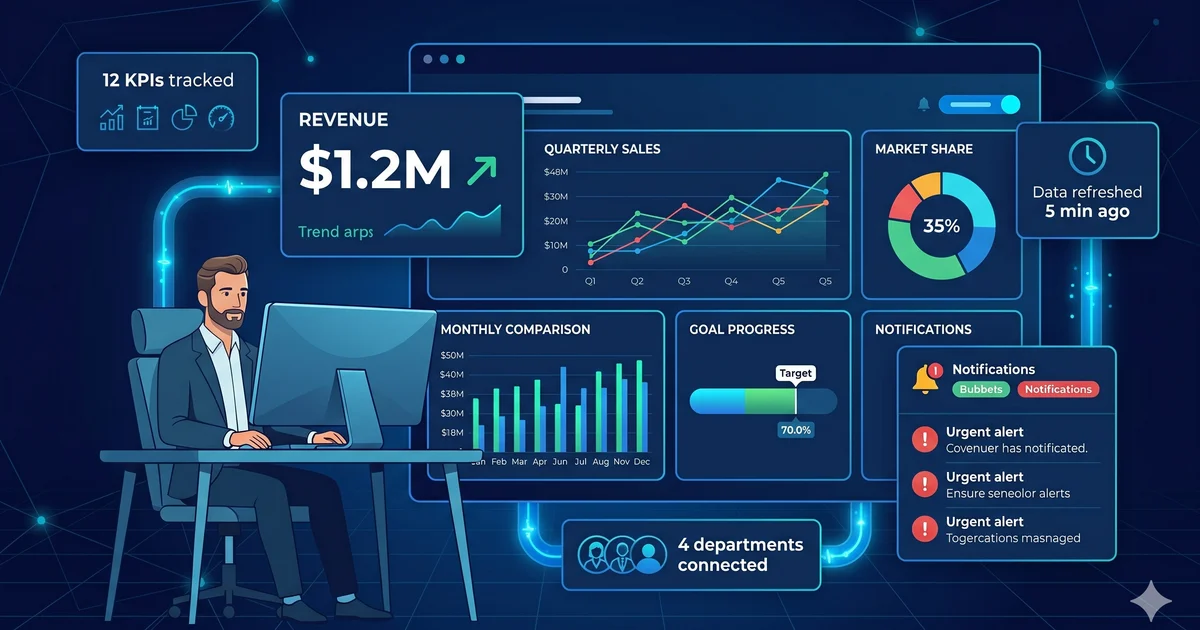
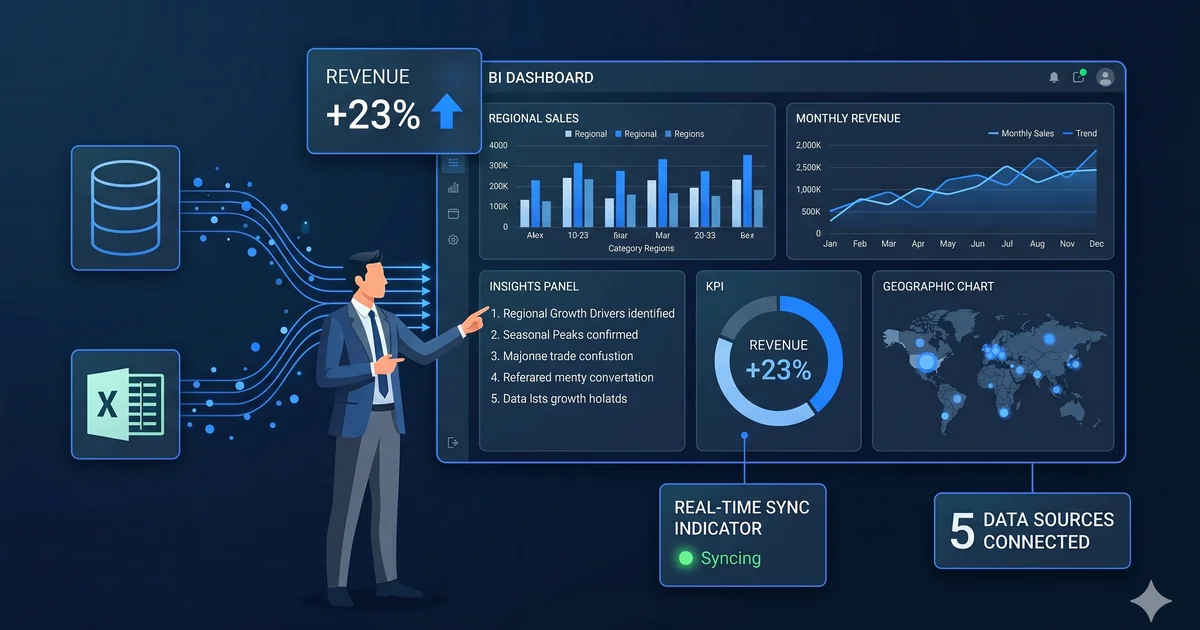
Also known as BI, the concept of Business Intelligence involves the sharing, analysis and generation of data and information in an automated and highly practical way, helping managers make important decisions.
Applied across large accounting departments and beyond, BI is, in short, a set of methods, practices, tools and resources aimed at improving the integration of the company as a whole.
In the hands of the right professionals, it becomes much easier to gain a panoramic view of business processes, spot errors and bottlenecks, and, as already mentioned, support decision-making.
Moving away from the more common business environment and into the logistics sector, there is a strong relationship between logistics companies and the topic discussed in this article.
It is also worth highlighting that one of the greatest challenges the logistics sector faces today, quite unlike companies that apply BI, is achieving efficiency in a field where very little technology is implemented.
Not for lack of effort, but because tasks and demands are largely carried out without the need for technology, with much of this work performed manually.
Of course, some operations can benefit from certain technologies or machinery, but the investment may not be worthwhile, whether due to the application itself, space constraints, or actual necessity.
Therefore, when thinking about the logistics sector, regardless of whether your company provides support to industries, some key elements should be considered, such as:
- Better organisation of demands;
- Broad view of processes;
- Enables improved financial management;
- More effective system integration.
Other examples could certainly be highlighted, but the vast majority fit within these subcategories, demonstrating the impact that Business Intelligence can have on your business.
Whether you like it or not, much like companies offering other services, logistics and the processes involved in Business Intelligence are quite costly, which is exactly why these market strategies can be extremely beneficial.
Simply put, BI serves to create a more practical and efficient path, better data organisation, and a clearer view of the business itself.
In a market as competitive as logistics, being faster and more efficient can be the differentiating factor that leads many clients to choose your business over others in the same sector.
And when the field is logistics, the greater the speed and safety of what is transported, the more satisfied and loyal the client will be.
Of course, a logistics operation, although a large part of the work is the dispatch process, is much more than simply shipping items. It needs to organise its space very effectively so that its services and products arrive and depart at an efficient pace.
As such, BI greatly assists in optimising time and reducing costs. When measured against other companies, this strategy is well worth the investment and delivers numerous benefits.
Benefits we will discuss in the next section, because if the client is satisfied, greater profits, reach and market relevance follow, in any sector.
The Benefits of Business Intelligence
As with any action in the business world, no investment is made without the company gaining some advantage, whether in return on capital, time optimisation, increased reach or greater authority in the sector.
BI is no different. So, here are some of the benefits of investing in this strategy, to help you decide once and for all whether to adopt these practices:
01 - Better identification of failures
As discussed throughout the article, BI is very effective at preventing failures and anticipating potential errors in the process, especially with the help of that well-known panoramic view and an overall sense of how the project and demands are progressing.
The greater the number of manual processes a company has, the greater the possibility of making errors that go unnoticed. After all, humans make mistakes, and others may not immediately spot those failures.
A good example is the monitoring of a logistics company's trucks. Without BI, such management is very likely to be handled via phone calls and messages, and it doesn't take much effort to see the real problem with that approach.
No signal, a phone out of coverage area, or a flat battery are just some of the obstacles you may face, so optimising these processes is essential for delivering quality management.
02 - Effective financial management
The logistics sector is one of the highest-spending industries and requires considerable capital to keep running, particularly when we consider truck maintenance, tolls, fuel and other fees.
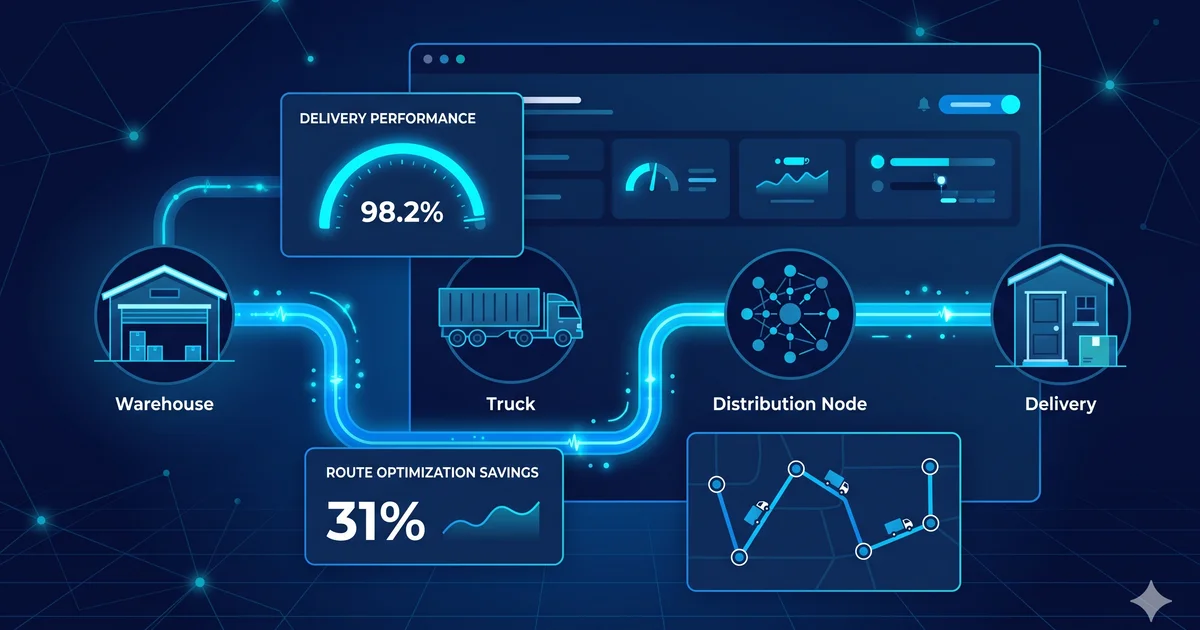
Therefore, it is essential to establish the best route, on the best day and in the shortest time possible, to avoid unnecessary costs. And Business Intelligence is essential for achieving this level of quality management.
With more precise management, better financial control and real-time information on what is happening, it becomes far more motivating and sensible to invest in these strategies that are gaining ever more ground in the job market.
03 - Organisation and optimisation of time and space
When we consider the volume of demands a logistics company faces, the number of products and services that must be delivered, and the number of processes that must be resolved, organisation becomes a key factor.
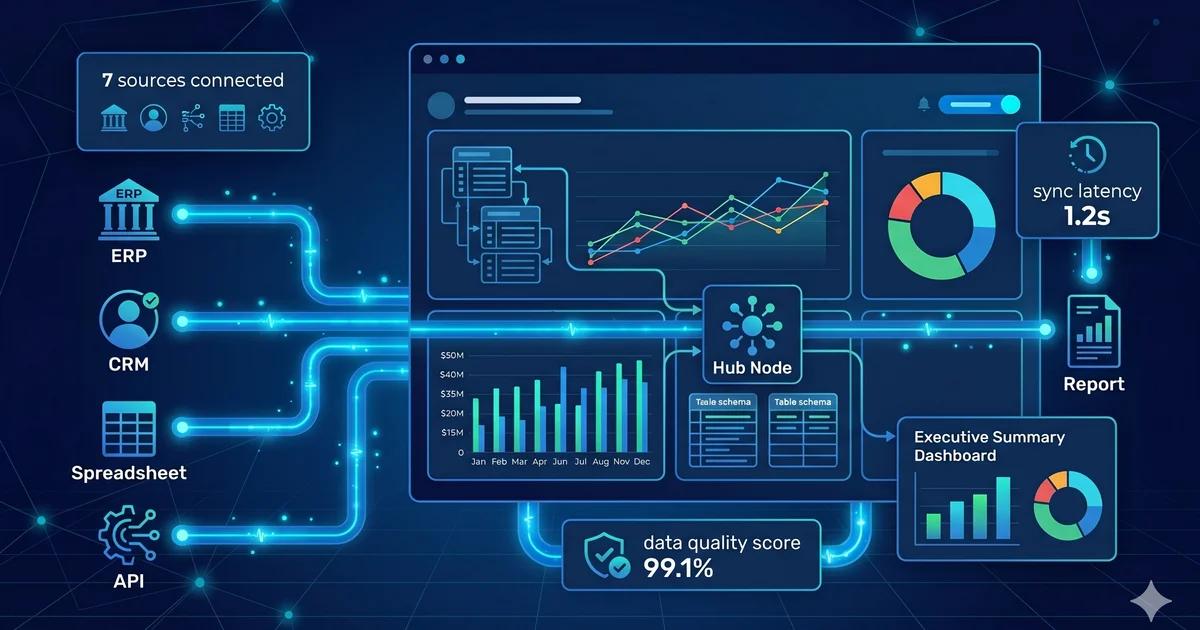
Without a system that integrates and delivers diverse information quickly and practically, much can be lost between emails and files, creating complete chaos and making processes less effective and functional.
Doing all of this practically by hand, using only standard computer programmes, can be an enormous mistake, and this is precisely where BI comes in and shines.
Having access to more information in less time, presented simply and directly, can be the difference between a successful business and a failure. Keep this in mind when you start considering Business Intelligence for your company.
Final Thoughts
Today's article has explored how Business Intelligence can be essential for your company and how it can have a very positive impact, helping your organisation gain increasing relevance in the marketplace.
Of course, each company has its own business vision, ways of negotiating, objectives, targets and clients to attract, so adapt the content presented here to the reality of your organisation.

Product with proven ROI in real data
Sthealth reduced billing errors from 15% to 4% in 60 days. See how strategic data transforms operations.
View case studies