
Machine Learning: What It Is and How Your Business Can Use It
Machine Learning, or automated machine learning, is a technology concept associated with Artificial Intelligence that is present in the daily lives of practically everyone, though you may not yet know the term.
Another very common issue is confusion between these two concepts, machine learning and artificial intelligence, however, they are not synonyms.
In the business world, these are just a few of the many key concepts needed to build a solid knowledge base around digital processes, enabling strategic planning and informed decision-making.
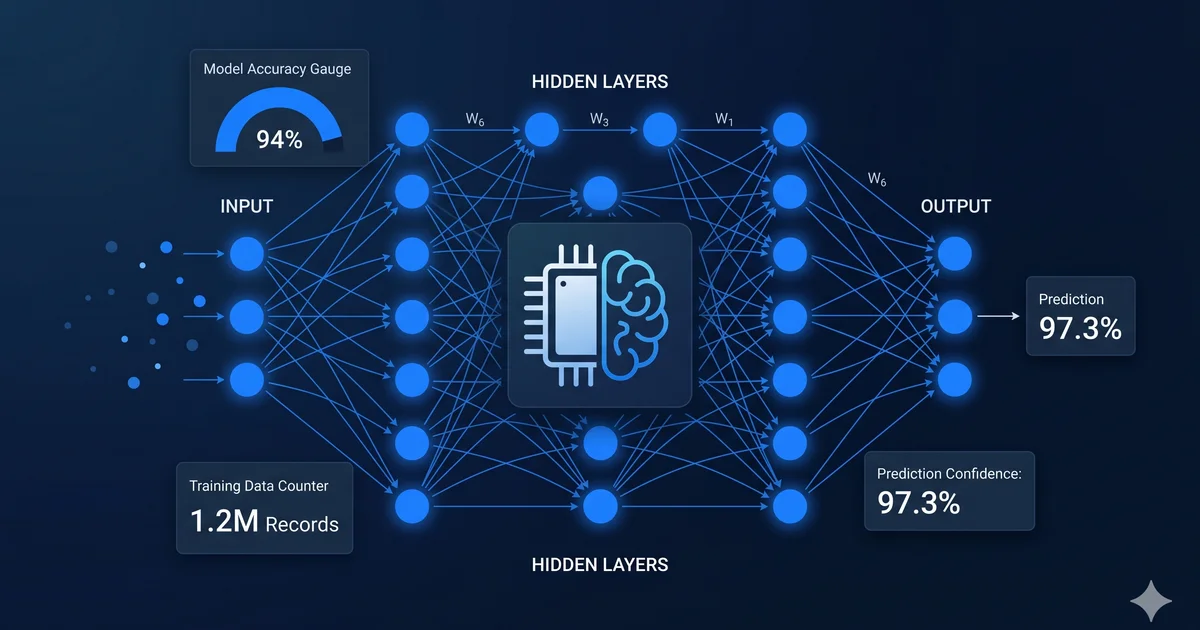
Machine learning refers to a branch of Artificial Intelligence that deals with automating the construction of analytical models, in other words, the system learning from the data it receives through automated analysis.
In this way, it can identify patterns and make decisions with minimal need for human intervention.
Continue reading to understand more about this technology and its main applications in businesses across the most diverse sectors and segments.
Machine Learning and Artificial Intelligence
As mentioned, machine learning is a very specific branch of Artificial Intelligence, focused on system learning.
Artificial Intelligence is the field of science that aims to develop computational mechanisms to mimic human capabilities, in other words, to base problem-solving on human behaviour.
And one of the main characteristics of human beings is precisely the ability to learn from different situations and improve skills through the repeated practice of an action.
This technology has been in development for some time, but the refinement of complex calculations involving big data, enormous quantities of data, has brought exponential advances.
Citing a few examples of its application, you are almost certainly familiar with Google: from its famous search engine to other technologies, such as the self-driving cars this tech giant is developing, all of it relies on machine learning.
For example, when you type a query into a search engine, there is a series of contexts that shape the results. With machine learning, the algorithm can identify patterns from previous searches to direct the most relevant result.
If previous search experiences had a different context, meaning the learning was different, such as searches for job vacancies and career opportunities, the results would undoubtedly be linked to that professional context.
It is this understanding of context through the analysis of different parameters and their connection, enabling good decisions, that optimises the user experience.
Another example is the recommendations from streaming platforms, or even sponsored advertisements. All of them rely on algorithms to direct their suggestions based on what the platform has learned about the user's tastes and preferences.
Fraud detection systems are yet another application of machine learning, deployed at scale across the entire world. There is no capitalised company that provides security to its customers and its own assets without such a system in place.
From digital platforms to banking systems, cutting-edge technological solutions are employed, and this obviously includes machine learning.
Deep Learning and Data Mining
In security systems, a more specific and widely used approach is Deep Learning, a form of in-depth learning in which different neural network layers process gigantic quantities of data.
This enables precise visual recognition, such as faces or objects in videos and static images. As you can see, machine learning encompasses other technologies, including deep learning and data mining.
All of them share the objective of extracting their own insights from observed patterns and contextual analysis for decision-making, but they have different approaches.
The main characteristic of Machine Learning is that its more specific objective is to understand data structure in order to define the logic to be followed.
Data mining, on the other hand, is a superset of methods for extracting insights. It is typically a combination of learning, traditional statistical methods and serial analyses, and is related to data storage and manipulation.
And deep learning, as seen in its main application, is focused on analyses involving interactions between complex data networks.
In this introduction, we have already given several examples of the diverse applications of machine learning, it is a concept that is easily explained through its practical uses, although its technical aspects and logical processes require a deeper knowledge of the subject.
We will now highlight other applications so that you can gain more ideas about how to immediately implement these features in your company and benefit from this technology.
Some Practical Applications
Machine learning, like the other processes of Artificial Intelligence, is what makes the existence of numerous technological resources viable.
We can therefore say that this is a present-day trend already being seen in practice, and its use will only continue to grow and diversify further.
Among the types of services and companies that already use it actively are the various segments that work with big data, such as:
- Financial services;
- Government agencies;
- Healthcare providers;
- Marketing and sales departments;
- Oil, gas and transport sectors.
The competitive advantage generated from insights obtained in real time through automated data analysis is enormous.
And these results also apply to small and medium-sized businesses, since they are corporate solutions.
Autonomous database
Machine learning allows the automation of various tasks that were previously performed by a database administrator. This enables that professional to focus on more specific tasks, whilst also reducing the risk of human error in the process.
Combating fraud in payment systems
Unfortunately, fraud involving credit cards and other payment methods, particularly online, is a constant reality.
Any organisation needs to be alert and prepared to deal with this, particularly B2B companies that work with high-value transactions.
As a solution, machine learning enables fraud prevention systems to handle different actions and block such attempts ever more effectively.
Text translation
Translating text into different languages is a challenge not only for people, but also for machines, and machine learning has provided the solution to this problem.
When producing a translation, beyond the literal meaning of each term, numerous parameters must be considered, such as context, language styles and regional expressions like slang. This is how automatic translators are being progressively optimised.
The Importance of Machine Learning
Seeing its application across the most diverse market sectors makes it easy to understand the importance of this technology.
Harnessing this modern-world capability within your company's processes means ensuring fast results and business growth.
With the increasing use of high-variety, high-volume data, computational processing is the cheapest, simplest and most intelligent way to handle, store, analyse and access that volume of information. This means speed and precision, regardless of scale.
In very practical terms, we can say that the main importance of machine learning lies in its capacity and accuracy in building models that allow an organisation to avoid unnecessary risks and identify good business opportunities.
Final Thoughts
From construction sector companies to health entrepreneurs, the textile industry, marketing firms and every other segment, all can and will benefit from machine learning in their businesses.
Although we are already seeing wide adoption not only of machine learning specifically, but of Artificial Intelligence as a whole, this is just the beginning, and the fact is that in a short time it will be global.
If these technologies are already proving impressively useful today, with the passage of time and the increase in the volume of data processed across different periods, they will be exponentially more powerful.
Furthermore, technological possibilities are also evolving daily, and you should associate this with the evolution of the very systems we have just described.

Product with proven ROI in real data
Sthealth reduced billing errors from 15% to 4% in 60 days. See how strategic data transforms operations.
View case studies